
 English
 Bulgarian

- 20
- May
Why Recovering Precious Metals from E-Waste at Home Is Dangerous, Inefficient and Often Unregulated
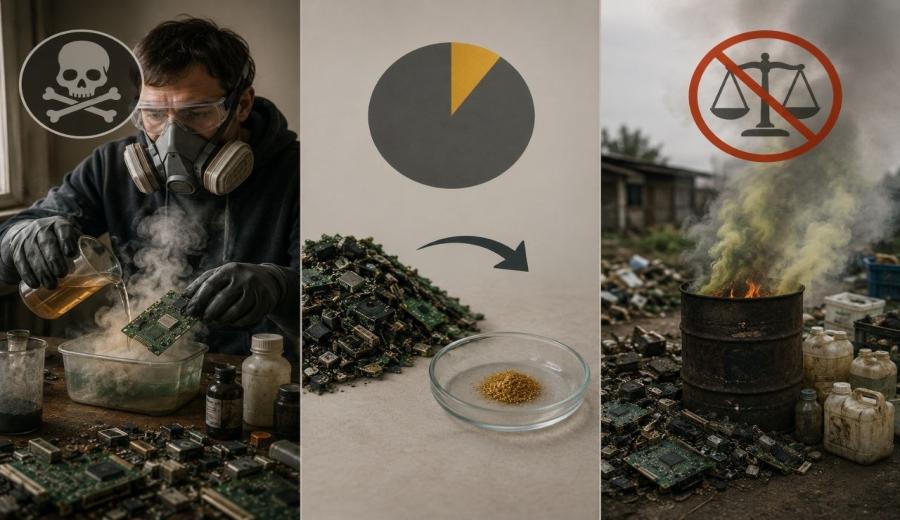
Compliance & Regulations 5 viewsAs metal prices continue to rise and electronic waste volumes grow worldwide, more people are becoming interested in recovering copper, gold, silver, palladium and other valuable materials from electronic scrap. The internet is full of videos and guides showing “DIY” methods for processing circuit boards, CPUs, RAM modules, cables and electronic components using burning, acids or mechanical shredding.
At first glance, these activities may appear simple and profitable. In reality, however, improper e-waste processing can create serious risks for human health, environmental safety and the operator performing the work. Depending on the methods, chemicals and scale involved, these activities may also fall under environmental, waste management and hazardous material regulations.
What Electronic Waste Actually Contains
Electronic waste is far more complex than simply “metal.” Modern electronics contain a mixture of:
- copper
- aluminium
- steel
- tin
- lead
- nickel
- zinc
- gold
- silver
- palladium
- lithium
- plastics
- fiberglass
- resins
- brominated flame retardants
- various industrial chemicals
While some of these materials have recovery value, separating them safely and efficiently is far more complicated than online videos often suggest.
For example:
- gold-plated contacts on RAM modules contain extremely thin gold layers
- circuit boards contain mixed materials bonded together
- cables may contain PVC, rubber, textiles and contaminants
- batteries may contain hazardous chemicals and fire risks
Why Burning Cables Is Dangerous
One of the most common informal recovery methods is burning cables to expose copper conductors. Although this may seem quick and inexpensive, it is extremely harmful.
Burning PVC insulation and electronic materials may release:
- toxic gases
- hydrochloric acid vapors
- dioxins
- furans
- heavy metal particles
- carcinogenic compounds
These substances not only pollute the air but may also contaminate soil, buildings and surrounding environments for long periods of time.
The process also creates direct health risks:
- inhalation of toxic fumes
- lung damage
- chemical exposure
- fire hazards
- burns
Industrial cable processing instead relies on:
- mechanical granulation
- material separation
- industrial ventilation
- dust filtration systems
- controlled recovery processes
The Risks of Acid Processing
Another popular topic online is gold recovery using acids such as:
- nitric acid
- hydrochloric acid
- aqua regia mixtures
- oxidizing chemicals
These substances are highly dangerous when handled improperly and may cause:
- severe chemical burns
- toxic gas exposure
- eye injuries
- poisoning
- fires
- violent chemical reactions
Mixing acids without proper laboratory controls can generate extremely hazardous gases. Without industrial ventilation, chemical-resistant equipment and proper training, such activities present serious safety risks.
Many people also underestimate the problem of chemical waste. After processing, hazardous residues often remain, including:
- acidic liquids
- metal sludge
- toxic solutions
- contaminated solids
Improper disposal may contaminate:
- drainage systems
- soil
- groundwater
- surrounding ecosystems
Home Recovery Is Often Economically Inefficient
Online content frequently creates the impression that electronic waste contains large amounts of precious metals. In reality, concentrations are often relatively low and recovering them efficiently requires:
- large material volumes
- industrial equipment
- sorting
- pre-treatment
- chemical processing
- refining infrastructure
In many cases:
- chemicals cost more than the recovered metal
- material losses are significant
- processing times are extremely high
- the risks outweigh the actual value recovered
Professional recovery companies operate using:
- large-scale material streams
- automated processing lines
- industrial separators
- controlled recovery systems
- downstream refining partnerships
- environmental compliance procedures
This is entirely different from small-scale home experiments.
Legal and Regulatory Considerations
In many countries, electronic waste processing is not treated simply as a hobby activity. Depending on:
- processing methods
- material quantities
- chemical usage
- storage conditions
- emissions
- transportation
the activity may fall under regulations related to:
- waste management
- hazardous waste
- environmental protection
- chemical handling
- fire safety
- occupational safety
Unregulated:
- cable burning
- acid disposal
- hazardous material storage
- environmental contamination
may result in environmental violations, penalties and legal consequences.
How Professional Recovery Works
Professional operators use controlled industrial processes for:
- sorting
- dismantling
- shredding
- separation
- material recovery
- secure handling
- downstream routing
- logistics management
Industrial facilities typically include:
- filtration systems
- ventilation
- dust collection systems
- hazardous material controls
- secure storage areas
- trained personnel
- specialized equipment
The objective is not simply “extracting metal,” but safely managing materials while minimizing environmental and health risks.
Environmental Impact
Improper electronic waste processing can create long-term environmental consequences, including:
- air pollution
- soil contamination
- toxic residues
- groundwater pollution
- risks to humans and wildlife
Electronic waste is one of the fastest-growing waste streams globally, which is why modern recovery operations are becoming increasingly regulated and technology-driven.
Conclusion
Although online videos often present precious metal recovery from electronic waste as easy and highly profitable, real-world processing requires:
- technical knowledge
- industrial safety
- specialized equipment
- controlled environments
- regulatory compliance
Home burning of cables, uncontrolled acid use and informal electronic waste processing can be dangerous, environmentally harmful and economically inefficient.
Responsible e-waste management requires professional handling, proper logistics and controlled recovery processes to safely recover valuable secondary raw materials.